


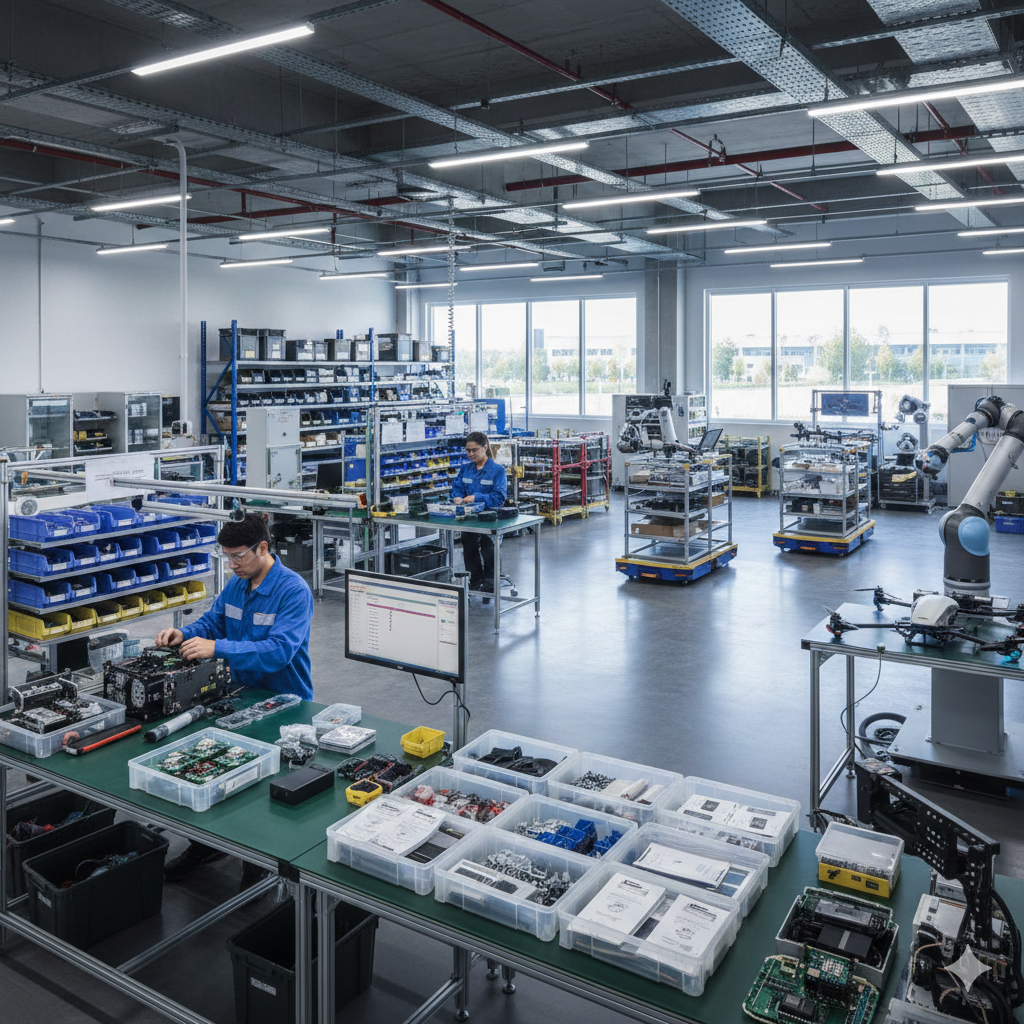
Efficient warehouse operations are the backbone of any successful supply chain. Companies constantly look for ways to reduce handling time, improve accuracy, and cut operational costs. One of the most effective strategies for achieving these goals is Kitting and Assembly. By organizing products into pre-packaged kits and assembling components before shipping, warehouses can streamline workflows, minimize errors, and boost overall productivity. This approach transforms operations from reactive, error-prone systems into highly efficient, scalable processes.
Kitting and assembly are no longer optional—they are essential for businesses aiming to meet modern fulfillment demands and exceed customer expectations.
Understanding Kitting and Assembly
Kitting is the process of grouping individual items into ready-to-ship sets, while assembly involves combining components into a finished product. These processes are particularly valuable in industries with complex products, subscription boxes, or bundled offerings.
The main advantage of kitting and assembly is efficiency: rather than picking multiple items for each order individually, warehouse staff can handle pre-assembled kits or assembled products, reducing time and effort while improving accuracy.
The Impact on Warehouse Efficiency
Faster Order Fulfillment
Kitting and assembly streamline the picking process. Workers no longer need to gather separate items for each order, which significantly reduces the time required to prepare shipments. Faster fulfillment improves customer satisfaction and allows warehouses to handle higher order volumes with the same resources.
Reduced Picking Errors
Accuracy is crucial in warehouse operations. Kitting reduces the risk of mistakes by ensuring that all necessary components are grouped together before shipping. This minimizes returns, customer complaints, and rework, ultimately saving time and money.
Optimized Labor Utilization
By organizing products into kits and handling pre-assembled units, warehouses can make better use of staff time. Employees spend less time searching for items and more time on value-added tasks, increasing overall productivity.
Streamlined Inventory Management
Kitting and assembly provide a clearer view of stock levels. Pre-packaged kits make it easier to track inventory, anticipate demand, and reduce the risk of stockouts or overstocking. Improved inventory control also supports better financial planning.
Strategies for Implementing Kitting and Assembly
Design Efficient Workspaces
Allocate specific areas in the warehouse for kitting and assembly. Ensure that components, tools, and packaging materials are easily accessible to minimize movement and avoid bottlenecks.
Standardize Processes
Create clear standard operating procedures (SOPs) for assembling and kitting products. Standardization ensures consistency, reduces errors, and simplifies employee training.
Use Technology to Your Advantage
Warehouse management systems (WMS), barcode scanners, and inventory tracking software enhance efficiency and accuracy. Automation tools, such as conveyor belts or robotic arms, can further reduce manual labor and speed up workflows.
Train Employees Effectively
Well-trained staff are essential for efficient kitting and assembly. Provide comprehensive training to ensure employees understand processes, safety protocols, and quality standards.
Batch Processing
Grouping similar orders together for assembly or kitting allows staff to complete multiple orders simultaneously. This approach reduces setup time and improves overall throughput.
Benefits Beyond Efficiency
Enhanced Customer Satisfaction
When orders are accurate, complete, and delivered on time, customers are more likely to return. Kitting and assembly improve order reliability, building trust and long-term loyalty.
Cost Savings
Reducing errors, improving labor efficiency, and minimizing handling time translates directly into cost savings. Pre-assembled kits also help lower packaging and shipping costs by optimizing space.
Scalability
As businesses grow, kitting and assembly make it easier to scale operations. Efficient workflows can accommodate higher order volumes without proportional increases in labor or warehouse space.
Improved Quality Control
Kitting and assembly provide opportunities for quality checks before products leave the warehouse. Detecting and correcting errors early reduces returns and enhances brand reputation.
Common Challenges and Solutions
Inventory Coordination
Maintaining the right balance of components for kits can be challenging. Use real-time inventory tracking and automated alerts to prevent shortages and ensure timely replenishment.
Space Constraints
Kitting and assembly require designated areas. Efficient layout planning and vertical storage solutions can maximize space utilization.
Maintaining Accuracy
Errors in assembly or kitting can impact customer satisfaction. Implement checklists, barcode verification, and quality control measures to maintain consistency.
Employee Turnover
High turnover can disrupt operations. Standardized procedures and cross-training staff ensure continuity and consistent performance even when personnel changes occur.
Real-World Applications
Kitting and assembly benefit a wide range of industries:
-
Ecommerce: Subscription boxes, bundled promotions, and gift sets rely heavily on kitting for speed and accuracy.
-
Electronics: Complex devices with multiple components require assembly before shipment.
-
Healthcare: Pre-packaged medical kits simplify hospital operations and improve patient care.
-
Manufacturing: Assembled parts ready for shipment reduce handling and support just-in-time delivery.
Across all industries, the focus remains on efficiency, accuracy, and customer satisfaction.
Future Trends in Kitting and Assembly
Technology continues to reshape warehouse operations. Automation, robotics, and AI-driven inventory management are streamlining kitting and assembly processes even further.
-
Robotics: Reduce manual labor and improve consistency.
-
AI Analytics: Predict demand and optimize inventory levels.
-
Advanced WMS: Real-time tracking and automated workflows enhance efficiency.
Businesses adopting these technologies early gain a competitive advantage, reducing costs and improving operational resilience.
Measuring Success
Key performance indicators (KPIs) help warehouses track the effectiveness of kitting and assembly operations:
-
Order accuracy rate
-
Average fulfillment time
-
Labor cost per kit
-
Return rates due to errors
Monitoring these metrics allows continuous improvement and ensures that kitting and assembly deliver tangible operational benefits.
Conclusion
Mastering kitting and assembly can transform warehouse operations by improving efficiency, reducing errors, and saving costs. Strategic implementation, proper workspace design, technology adoption, and employee training are key to maximizing benefits.
Businesses that invest in these processes not only optimize current operations but also build scalable systems capable of handling growth and increasing customer expectations. Kitting and assembly are more than logistical tasks—they are strategic tools that drive operational excellence and long-term success.

 hebrew
 French
 Russian
 Arabic