


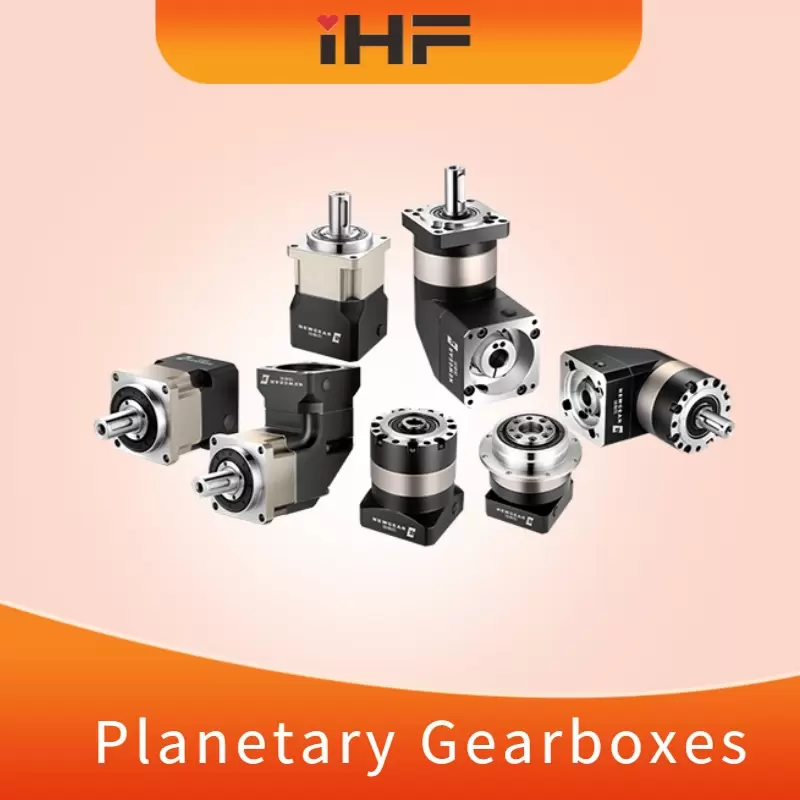
In real-world industrial environments, machine layouts are rarely straightforward. Limited space, complex structures, and integrated system designs often require power to be transmitted at a 90-degree angle rather than in a straight line.
This is exactly where the industrial right angle gearbox comes in. It allows torque and rotational motion to be redirected efficiently while maintaining a compact, stable, and reliable mechanical setup.
Today, right angle gearboxes are no longer just auxiliary components—they’ve become a core part of systems like automation equipment, conveyor lines, packaging machines, and heavy-duty drives.
How a Right Angle Gearbox Works
At a basic level, a right angle gearbox changes the direction of power transmission—typically by 90 degrees—while controlling speed and torque output.
However, achieving this isn’t as simple as it sounds. Compared to inline gear reducers, right angle gearboxes deal with more complex force interactions, including:
- Multi-directional loads
- Gear meshing at angles
- Increased stress on bearings and shafts
A well-designed unit ensures smooth motion, minimal vibration, and stable performance even under continuous operation.
Gear Design: The Core of Performance
The internal gear structure largely determines how a right angle gearbox performs. Different configurations are used depending on application needs:
- Bevel gears – Efficient and widely used for general torque transmission
- Spiral bevel gears – Smoother operation with lower noise and higher load capacity
- Hypoid gears – Suitable for high torque with compact design advantages
- Worm gears – Offer self-locking capabilities, ideal for vertical or load-holding systems
Each type has its trade-offs. For example, bevel systems prioritize efficiency, while worm gears sacrifice some efficiency for compactness and safety features like self-locking.
Manufacturers such as iHF Group typically select gear geometry based on actual operating conditions rather than a one-size-fits-all approach.
Structural Strength and Load Management
Right angle gearboxes operate under combined forces—radial, axial, and torsional—which makes structural rigidity extremely important.
Key factors include:
- Housing strength: Prevents deformation under load and protects internal components
- Bearing layout: Ensures proper load distribution and reduces wear
- Shaft support: Maintains alignment and prevents vibration
If these elements aren’t properly engineered, issues like noise, uneven wear, or even mechanical failure can occur.
Materials and Surface Engineering
Durability in industrial gearboxes depends heavily on material selection and treatment processes.
High-quality units typically use:
- Alloy steels for gears and shafts
- Heat treatments such as carburizing or nitriding
- Precision grinding for smoother contact surfaces
These processes improve hardness, reduce friction, and extend service life—especially in high-load or continuous-operation environments.
Manufacturing Precision Matters
Even the best design won’t perform well without precise manufacturing and assembly.
Critical aspects include:
- Gear tooth accuracy
- Shaft alignment and concentricity
- Proper bearing preload
- Controlled assembly processes
Advanced machining technologies and strict quality control ensure that every component fits and functions as intended, minimizing vibration and maximizing efficiency.
Where Right Angle Gearboxes Are Used
Because of their flexibility and reliability, these gearboxes are widely used across multiple industries:
- Material handling and conveyor systems
- Automated production lines
- Packaging machinery
- Food processing equipment
- Industrial robotics
Each application comes with its own requirements—whether it’s hygiene standards, exposure to harsh environments, or fluctuating loads—so gearbox design must be adapted accordingly.
Final Thoughts
The industrial right angle gearbox is far more than a simple directional component. It’s a carefully engineered solution that enables efficient power transmission in compact and complex machine layouts.
By combining smart design, high-quality materials, and precision manufacturing, companies like iHF Group continue to deliver gearboxes that meet the evolving demands of modern industry.
As industrial systems become more compact and performance-driven, the role of the right angle gearbox will only become more important.

 English
 French
 Russian
 Arabic