


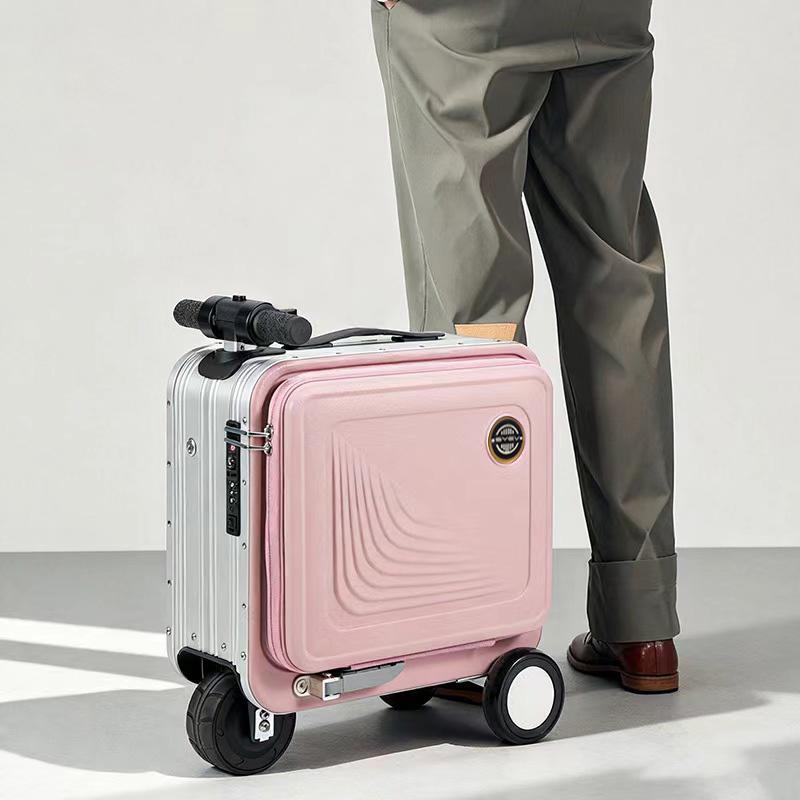
The global travel industry is undergoing rapid digital transformation. Automation, artificial intelligence (AI), and IoT connectivity are reshaping how travelers navigate airports, business districts, and urban spaces. Within this evolution, robotic luggage manufacturers are playing a pivotal role by integrating robotics engineering, battery technology, and mobility systems into everyday travel equipment.
Unlike conventional suitcases, robotic luggage is a self-driving, sensor-integrated mobility platform. It combines autonomous navigation algorithms, electric propulsion systems, and embedded control modules to create an intelligent travel companion capable of following its owner or operating via remote control.
Among forward-thinking innovators in this field, SYEV has emerged as a specialized developer of robotic mobility solutions, combining industrial design precision with embedded system engineering expertise.
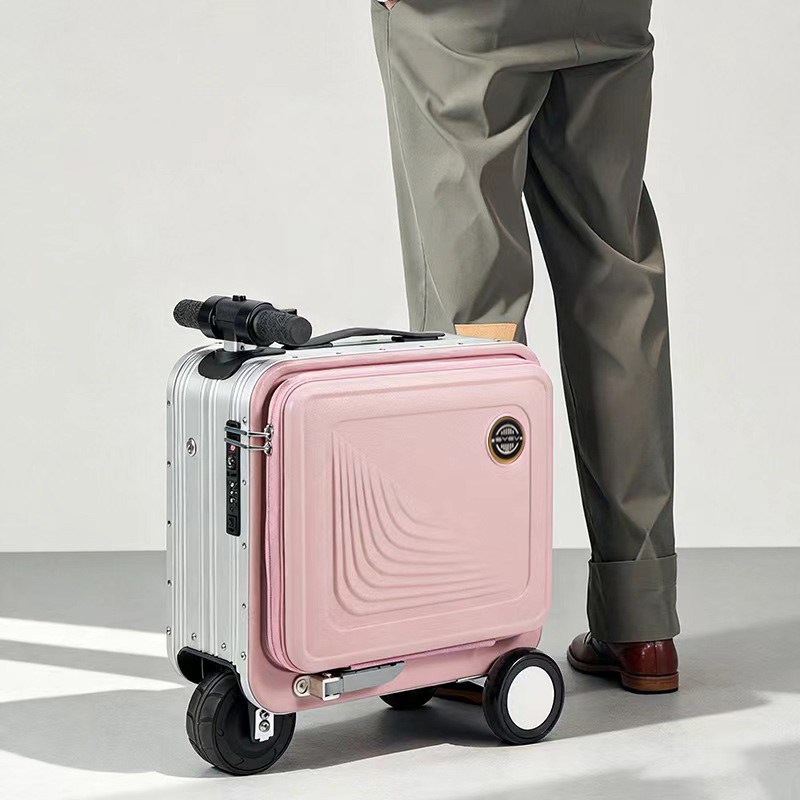
Engineering Architecture Behind Robotic Luggage
To understand what distinguishes leading robotic luggage manufacturers, it is essential to examine the core engineering subsystems.
1. Autonomous Navigation System
Modern robotic luggage integrates:
-
Ultrasonic sensors
-
LiDAR or infrared ranging modules
-
Computer vision cameras
-
AI-based object detection algorithms
These components enable obstacle avoidance, trajectory optimization, and user tracking. Advanced systems employ real-time path planning algorithms similar to those used in service robots.
Precision localization is critical in high-traffic environments such as airports, where unpredictable pedestrian movement demands fast response latency and adaptive route correction.
SYEV integrates multi-sensor fusion technology to improve environmental perception accuracy and reduce collision risk, ensuring smooth autonomous operation.
2. Electric Drive and Battery Management
Robotic luggage relies on compact yet powerful electric hub motors. Key performance metrics include:
-
Torque output stability
-
Energy efficiency
-
Thermal management
-
Noise reduction
Lithium-ion battery packs are typically designed to comply with international aviation transport regulations, including watt-hour limits for carry-on devices.
A robust Battery Management System (BMS) ensures:
-
Overcharge protection
-
Overcurrent protection
-
Thermal regulation
-
Real-time power monitoring
Professional robotic luggage manufacturers prioritize both safety certification and endurance performance, ensuring consistent operation across extended travel durations.
3. Structural and Material Engineering
Durability remains fundamental. Robotic luggage must withstand:
-
Impact forces during transport
-
Variable humidity conditions
-
Repeated mechanical stress
-
Load-bearing pressure
Manufacturers use high-strength materials such as:
-
Aerospace-grade aluminum frames
-
Polycarbonate shells
-
Reinforced composite polymers
Structural integrity must coexist with lightweight design principles to ensure mobility efficiency. SYEV applies advanced material optimization techniques to achieve a balance between structural strength and overall weight reduction.
Key Competitive Factors Among Robotic Luggage Manufacturers
Not all robotic luggage solutions are equal. High-quality manufacturers differentiate themselves through:
• Embedded Software Development
Custom firmware enables stable Bluetooth, GPS, and app connectivity while maintaining cybersecurity standards.
• Intelligent User Interface
Mobile applications allow speed control, distance calibration, security lock management, and power diagnostics.
• Safety Compliance
Compliance with CE, FCC, UN38.3, and aviation regulations is essential for international deployment.
• Scalable Production Capacity
Industrial-grade manufacturing processes ensure consistency in motor alignment, PCB assembly, and chassis calibration.
SYEV leverages vertically integrated production systems to maintain tight quality control from electronic assembly to final mechanical testing.
Applications Beyond Personal Travel
Robotic luggage is expanding beyond leisure use. Emerging application sectors include:
-
Business professionals navigating large exhibition centers
-
Elderly travelers requiring mobility assistance
-
Smart campus transportation
-
Autonomous delivery solutions in controlled environments
Some robotic luggage platforms incorporate seat functionality, converting into rideable devices capable of supporting adult weight while maintaining battery efficiency.
For robotic luggage manufacturers, scalability and modular design are critical for adapting products to multiple use cases.
Integration with Smart Ecosystems
The future of robotic luggage lies in connectivity. Integration with:
-
Smart airport infrastructure
-
IoT-based navigation networks
-
Cloud data analytics platforms
will enable enhanced real-time tracking, predictive maintenance, and remote diagnostics.
Manufacturers investing in AI-driven analytics can optimize motor performance, battery lifecycle prediction, and user behavior modeling.
SYEV’s R&D direction focuses on intelligent mobility ecosystems, where robotic luggage functions as part of a broader smart transportation network.
Manufacturing Challenges and Solutions
Developing robotic luggage involves multidisciplinary engineering challenges:
1. Miniaturization of Components
High-performance electronics must fit within compact form factors without compromising airflow or heat dissipation.
2. Stability and Balance Control
Dynamic balance algorithms prevent tipping during rapid turns or uneven terrain navigation.
3. Durability Under Dynamic Load
Mechanical joints and motor assemblies undergo extensive fatigue testing to ensure longevity.
Professional robotic luggage manufacturers invest heavily in:
-
Finite Element Analysis (FEA)
-
Vibration simulation testing
-
Environmental stress screening
These measures ensure that products can withstand real-world operating conditions.
Why SYEV Stands Out Among Robotic Luggage Manufacturers
SYEV combines:
-
Robotics engineering expertise
-
Precision mechanical manufacturing
-
Advanced embedded system development
-
International safety certification compliance
-
Customizable OEM/ODM capabilities
By integrating hardware innovation with intelligent software architecture, SYEV delivers robotic luggage solutions engineered for safety, reliability, and long-term performance.
In a rapidly evolving smart mobility market, manufacturers that combine industrial-grade production with AI-driven design are positioned to lead.
Conclusion
The rise of robotic luggage represents a convergence of robotics, AI, material science, and smart manufacturing. For travelers seeking convenience and for industries exploring autonomous mobility applications, robotic luggage is redefining transport dynamics.
Professional robotic luggage manufacturers must deliver precision engineering, regulatory compliance, and scalable production capability. SYEV exemplifies this integrated approach, positioning itself at the forefront of intelligent travel technology.
In the era of smart mobility, robotic luggage is not a novelty—it is an engineered solution shaping the future of personal transportation.

 English
 hebrew
 French
 Russian