


In industrial, commercial, and residential gas applications, connection integrity and operational safety are non-negotiable. As systems become more modular and maintenance cycles shorten, the demand for fast, repeatable, and leak-free connections has increased significantly. This is where the quick gas line connector plays a critical role.
Unlike traditional threaded or welded fittings, quick gas line connectors are engineered to enable rapid connection and disconnection without compromising sealing performance. When properly designed, they reduce installation time, minimize human error, and enhance system safety—particularly in environments where frequent equipment changes or maintenance are required.
Manufacturers such as Contriu focus on precision-engineered quick gas line connectors that meet both operational efficiency and stringent safety requirements across multiple industries.
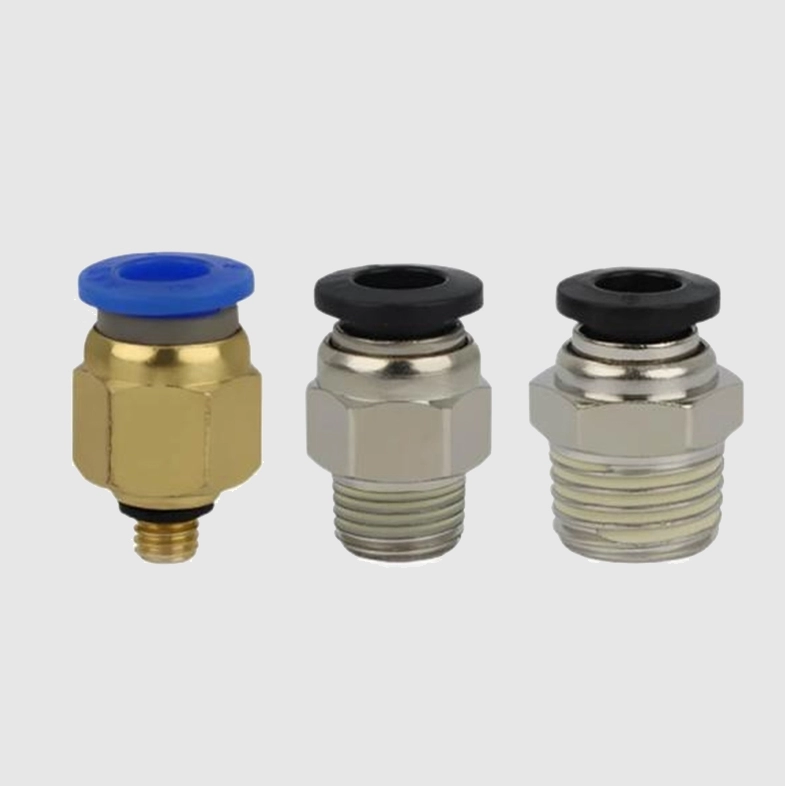
Core Engineering Principles Behind Quick Gas Line Connectors
Positive Locking and Automatic Shut-Off
A defining feature of a high-quality quick gas line connector is its positive locking mechanism, which ensures the connection cannot be unintentionally disengaged during operation. Many designs also integrate an automatic shut-off valve, which instantly stops gas flow when the connector is disconnected.
This dual-function approach significantly reduces the risk of gas leakage during maintenance or equipment replacement, especially in high-pressure or combustible gas systems.
Precision Sealing Technology
Gas systems demand zero tolerance for leakage. Advanced quick gas line connectors utilize:
-
High-performance elastomer or metal-to-metal seals
-
Optimized sealing geometry to maintain contact under pressure
-
Resistance to gas permeation and aging
Contriu applies strict material selection and sealing validation to ensure stable performance across temperature and pressure fluctuations.
Materials and Manufacturing Standards
Material Compatibility with Different Gases
Quick gas line connectors must be compatible with a wide range of gases, including natural gas, LPG, compressed air-gas mixtures, and industrial specialty gases. Material selection typically includes:
-
Brass or stainless steel for corrosion resistance
-
Specialized polymers for lightweight applications
-
Seals formulated for chemical compatibility
Incorrect material choices can lead to seal degradation or structural failure over time, making engineering expertise essential.
Compliance with International Safety Standards
High-quality quick gas line connectors are designed and tested according to recognized standards such as:
-
Gas pressure and leak-tightness requirements
-
Cycle life and fatigue testing
-
Fire and burst resistance benchmarks
Contriu aligns its product development with relevant international safety expectations, ensuring reliability in demanding applications.
Application Scenarios Across Industries
Commercial Kitchen and Catering Equipment
In commercial kitchens, equipment such as gas stoves, ovens, and grills often require periodic relocation or servicing. Quick gas line connectors allow safe and fast disconnection without shutting down the entire gas supply system, improving operational efficiency while maintaining safety.
Industrial Machinery and Process Equipment
Manufacturing equipment using gas for heating, cutting, or processing benefits from modular gas connections. Quick connectors reduce downtime during equipment changeovers and simplify maintenance workflows.
Laboratory and Medical Gas Systems
In controlled environments where cleanliness and precision are critical, quick gas line connectors provide secure connections with minimal disturbance, supporting both safety and operational accuracy.
Performance Advantages Over Traditional Gas Fittings
Reduced Installation and Maintenance Time
Threaded fittings require tools, sealants, and careful torque control. In contrast, a quick gas line connector can be engaged or disengaged in seconds, significantly reducing labor costs and system downtime.
Improved Safety and Error Reduction
By design, quick connectors reduce the likelihood of cross-threading, improper tightening, or incomplete sealing—common failure points in traditional connections.
Consistent Connection Quality
Every connection cycle delivers repeatable sealing performance, which is particularly valuable in environments with frequent reconnections.
Key Selection Criteria for Quick Gas Line Connectors
Pressure and Flow Requirements
Selecting a connector that matches system pressure ratings and required flow capacity is critical. Undersized connectors may restrict flow, while inadequate pressure ratings pose safety risks.
Connection Interface and Compatibility
Quick gas line connectors must be compatible with existing hoses, pipes, or equipment interfaces. Customization options—such as specific end fittings or connection geometries—are often required in specialized systems.
Lifecycle and Durability Expectations
High-cycle applications demand connectors tested for thousands of connection cycles without degradation. Contriu emphasizes durability testing to ensure long-term performance under repeated use.
Contriu’s Engineering Approach to Quick Gas Line Connectors
As a specialized manufacturer, Contriu focuses on delivering quick gas line connectors that balance safety, efficiency, and durability. Their engineering-driven approach includes:
-
Precision machining for consistent tolerances
-
Rigorous leak and pressure testing
-
Design optimization based on real-world application feedback
This ensures that each connector performs reliably across its intended service life.
Conclusion: Speed Without Compromising Safety
A quick gas line connector is far more than a convenience accessory—it is a safety-critical component that directly affects system reliability, operational efficiency, and risk control. When engineered correctly, it delivers fast connections, leak-free performance, and long-term durability.
By choosing professionally designed solutions from Contriu, system integrators and end users can achieve safer gas handling while streamlining installation and maintenance processes.

 English
 hebrew
 French
 Russian