


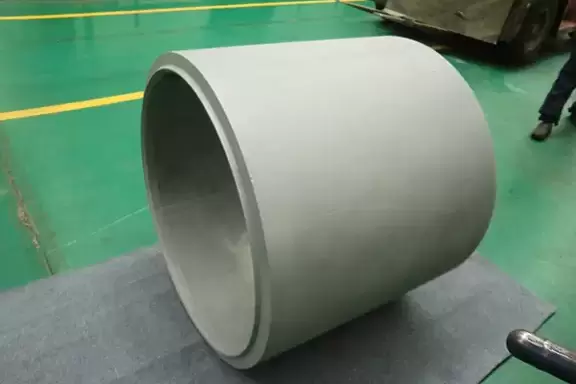
In heavy industries such as mining, metallurgy, and large-scale infrastructure, the machining accuracy of mechanical equipment parts is not merely a dimensional requirement—it is a determinant of operational reliability, structural safety, and lifecycle cost control. Unlike small precision components used in electronics or medical devices, mechanical equipment parts in these sectors often weigh several tons, operate under extreme loads, and endure abrasive and high-impact environments.
Achieving machining accuracy under these conditions requires advanced CNC capacity, metallurgical expertise, stress management strategies, and a deeply integrated manufacturing system. Jiangxi Hongdu Preciosion Machinery has developed comprehensive engineering capabilities to address these challenges, combining heavy-duty machining infrastructure with precision-driven quality control methodologies.

1. Scale and Weight: Precision Under Massive Load Conditions
One of the defining challenges in maintaining machining accuracy of mechanical equipment parts is sheer scale.
Engineering Realities:
-
Individual components may weigh multiple tons
-
Workpieces often exceed several meters in length or diameter
-
Material mass introduces handling-induced stress risks
Large-scale CNC gantry milling machines and heavy-duty horizontal boring mills with substantial spindle horsepower are required to process such components. However, machine capacity alone does not guarantee accuracy.
Critical Considerations:
-
Rigging systems must prevent torsional deformation during lifting
-
Custom fixturing must distribute clamping force evenly
-
Vibration damping systems reduce dynamic error
Improper handling can introduce residual stresses before machining even begins. Jiangxi Hongdu Preciosion Machinery employs specialized lifting and positioning systems, combined with stress-balanced clamping solutions, to maintain geometric stability throughout the machining cycle.
2. Material Hardness and Tool Wear: The Metallurgical Challenge
Mining and heavy mechanical equipment components are typically manufactured from high-strength alloy steels and carbon steels designed to resist:
-
Abrasion
-
Impact loading
-
Fatigue stress
-
Cyclic thermal fluctuation
These materials, while durable in service, present substantial machining challenges.
Tooling Strategy:
-
Use of coated carbide and ceramic cutting tools
-
Optimized cutting geometry to reduce edge chipping
-
Precise speed and feed rate calculation
-
Adaptive toolpath programming
Tool wear is not merely a cost issue—it directly affects dimensional stability. Progressive wear can lead to tolerance drift, surface roughness degradation, and geometric deviation.
Advanced cooling strategies, including high-pressure coolant systems and controlled lubrication, are applied to maintain thermal stability and prolong tool life. Monitoring systems track tool condition to ensure consistency across long production runs.
3. Extreme Precision Over Large Geometries
Maintaining tight tolerances across expansive surfaces is a core difficulty in achieving machining accuracy of mechanical equipment parts.
Sources of Dimensional Deviation:
-
Thermal expansion during cutting
-
Machine structural deflection
-
Tool wear accumulation
-
Environmental temperature variation
For example, machining a large gearbox housing requires micron-level alignment accuracy across surfaces that may span several meters. Even minimal thermal growth can lead to assembly misalignment.
To counteract this:
-
Controlled workshop temperature environments are maintained
-
In-process measurement systems are integrated
-
Laser alignment verification is conducted
-
Finite element analysis (FEA) assists in predicting deformation
Jiangxi Hongdu Preciosion Machinery integrates real-time measurement technologies and calibrated coordinate measuring machines (CMM) to verify dimensional conformity before final delivery.
4. Structural Integrity of Welded Fabrications
Large mechanical equipment components frequently incorporate welded structures to reduce weight while maintaining strength.
However, welding introduces:
-
Residual stress concentration
-
Heat-affected zone (HAZ) distortion
-
Potential microcrack initiation
Without proper stress-relief treatment, these factors can compromise machining accuracy and long-term structural integrity.
Mitigation Techniques:
-
Controlled welding sequence planning
-
Post-weld heat treatment (PWHT)
-
Vibratory stress relief processes
-
Intermediate machining after stress stabilization
Ensuring the structural integrity of welded fabrications is critical, especially in mining machinery subjected to extreme shock loads. Machining must account for stress redistribution that may occur after initial cutting operations.
5. Integrated Quality Control Systems
Precision manufacturing for heavy equipment cannot rely on final inspection alone. It requires integrated quality control throughout the production lifecycle.
Key elements include:
-
Incoming material certification verification
-
Ultrasonic and non-destructive testing (NDT)
-
In-process dimensional monitoring
-
Surface roughness measurement
-
Final CMM validation
Traceability documentation ensures each mechanical equipment part meets contractual and regulatory requirements.
6. Surface Finish and Functional Performance
Machining accuracy extends beyond dimensional tolerances to include surface integrity.
Surface roughness affects:
-
Bearing seating stability
-
Lubrication retention
-
Wear resistance
-
Fatigue life
Advanced finishing techniques such as precision grinding and controlled milling passes ensure surface parameters align with engineering specifications.
7. The Strategic Importance of Machining Accuracy
Poor machining accuracy of mechanical equipment parts can result in:
-
Premature bearing failure
-
Gear misalignment
-
Increased vibration
-
Accelerated wear
-
Catastrophic operational breakdown
In high-load industries, such failures carry significant financial and safety implications.
By integrating large-scale machining capacity, metallurgical control, stress management, and advanced inspection systems, Jiangxi Hongdu Preciosion Machinery delivers components engineered for reliability under extreme operational conditions.
Conclusion
Achieving superior machining accuracy of mechanical equipment parts requires far more than powerful CNC machines. It demands comprehensive engineering integration—from material selection and stress management to thermal control and high-precision metrology.
In heavy-duty sectors such as mining and industrial manufacturing, precision across large geometries directly determines equipment performance and service life. With its advanced infrastructure and rigorous quality protocols, Jiangxi Hongdu Preciosion Machinery demonstrates how technical excellence transforms large-scale fabrication into precision-driven manufacturing.

 hebrew
 French
 Russian
 Arabic