


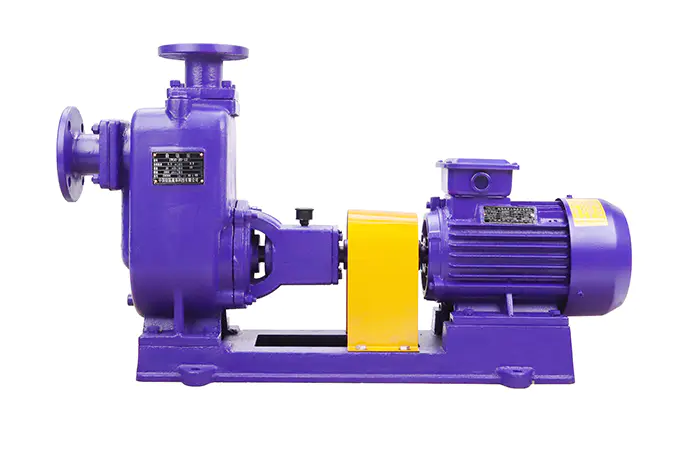
A Self-priming Pump often appears in systems where reliability matters more than constant supervision. In locations where suction lines empty after shutdown, restarting a pump can become troublesome. The Self-priming Pump addresses this issue by restoring flow automatically, even when air enters the line between cycles.
One advantage of a Self-priming Pump lies in its flexibility. It can handle mixtures of air and liquid during startup, making it suitable for drainage, wastewater handling, and temporary installations. This adaptability supports changing conditions without requiring frequent system adjustments.
Energy use depends on operating conditions rather than startup alone. During the priming phase, the pump works differently than during steady flow. Once liquid fills the suction line, performance stabilizes. Monitoring operating parameters helps ensure the Self-priming Pump runs within intended ranges.
Environmental factors influence pump behavior. Temperature affects fluid viscosity, which can change priming duration. Suspended solids may increase wear on internal components. Selecting the appropriate pump configuration helps balance these influences and maintain reliable performance.
A Self-priming Pump supports systems where conditions are not always predictable. It adapts to air intrusion and restores flow without interruption. By reducing manual steps and handling changing suction conditions, the Self-priming Pump becomes a practical solution for many fluid transfer challenges.

 hebrew
 French
 Russian
 Arabic