


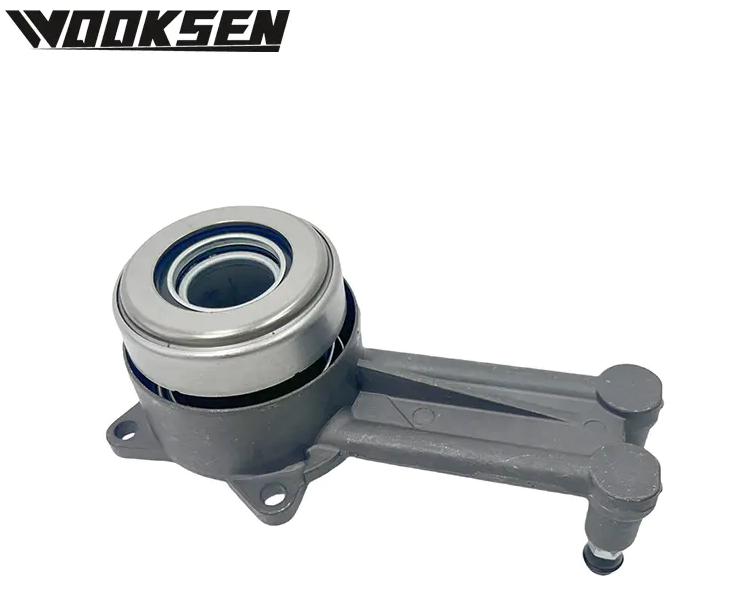
The hydraulic clutch release bearing operates far from the driver’s view, yet every gear change depends on its movement. Positioned between the clutch fork and pressure plate, this component transforms hydraulic pressure into mechanical motion. When the clutch pedal is pressed, fluid pressure travels through the system and activates the hydraulic clutch release bearing, allowing the clutch disc to disengage smoothly.
Unlike traditional mechanical designs, a hydraulic clutch release bearing combines actuation and release functions into one compact unit. This integration reduces the number of moving parts and eliminates the need for external linkage adjustments. Drivers often notice smoother pedal feel and more consistent engagement because the hydraulic clutch release bearing responds directly to fluid pressure rather than cable tension.
The internal structure of a hydraulic clutch release bearing includes seals, a piston, and fluid channels. Each part must work in harmony to maintain steady pressure. When the pedal moves, the piston advances and contacts the pressure plate fingers. This action releases clamping force, separating the engine from the transmission. Once the pedal returns, fluid pressure drops and the bearing retracts.
Heat and friction play constant roles in the life of a hydraulic clutch release bearing. Repeated gear changes generate thermal stress, especially in heavy traffic or long drives. Over time, seals may lose flexibility, allowing fluid leakage. When that happens, drivers might experience difficulty shifting, unusual pedal travel, or incomplete clutch disengagement.
Driving feel often reveals subtle clues. A spongy pedal, delayed disengagement, or grinding during shifts may point toward hydraulic clutch release bearing concerns. These signals do not always appear suddenly. Instead, they develop gradually, giving attentive drivers time to act before full failure occurs.
The hydraulic clutch release bearing may remain unnoticed during daily commutes, yet its role remains constant. Each shift relies on its controlled movement. Understanding this component turns an unfamiliar term into a familiar ally, quietly supporting smooth transitions between gears and helping drivers stay connected to the road.

 hebrew
 French
 Russian
 Arabic