


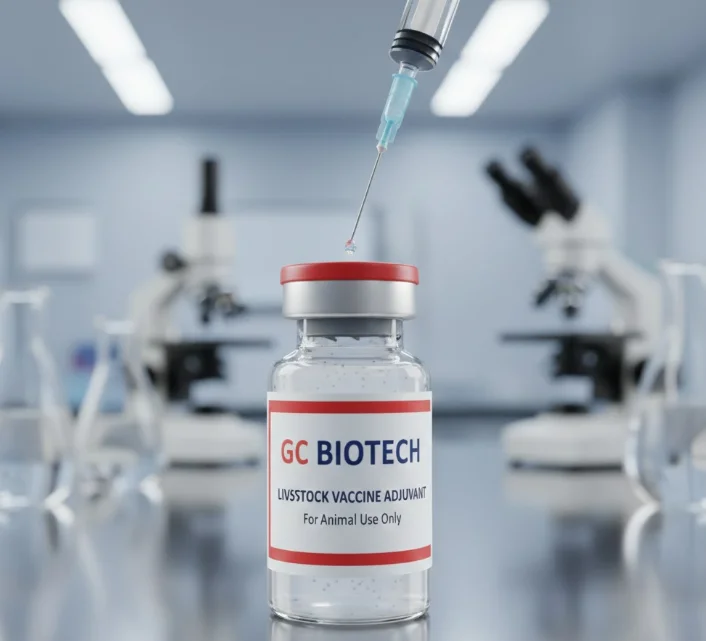
As global livestock production becomes increasingly intensive and biosecurity-focused, disease prevention has emerged as a strategic priority rather than a reactive measure. Vaccination remains the most cost-effective and sustainable tool for controlling infectious diseases in cattle, swine, poultry, and other farm animals. However, the effectiveness of a vaccine depends not only on the antigen itself, but also on the livestock vaccine adjuvant that supports and amplifies the immune response.
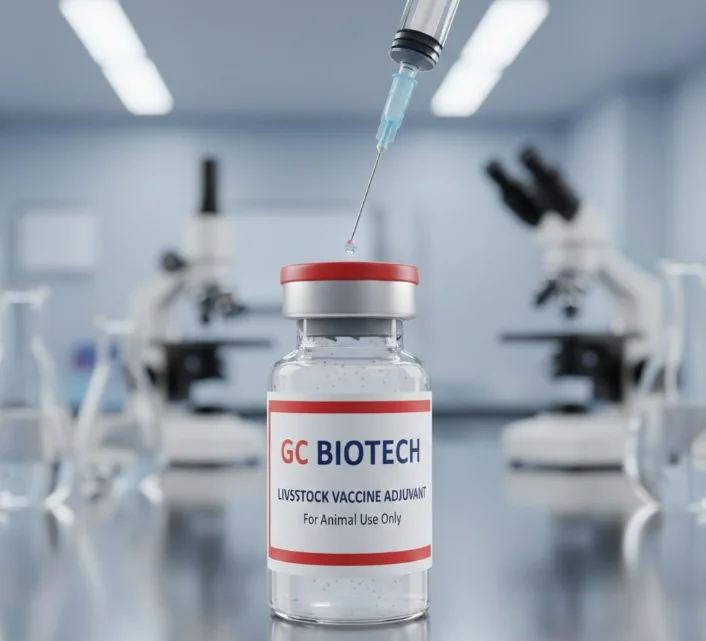
What Is a Livestock Vaccine Adjuvant
A livestock vaccine adjuvant is a substance added to a vaccine formulation to enhance the immune response to the target antigen. Rather than acting as an active immunogen, the adjuvant supports antigen presentation, stimulates innate immunity, and shapes adaptive immune pathways.
In veterinary applications, adjuvants play a particularly important role due to factors such as:
-
Variable animal health status
-
Environmental stressors
-
High pathogen exposure pressure
-
Large-scale herd vaccination programs
An effective livestock vaccine adjuvant helps ensure consistent immune protection across diverse animal populations.
How Livestock Vaccine Adjuvants Enhance Immune Response
Improving Antigen Presentation
One of the primary functions of a livestock vaccine adjuvant is to improve how antigens are presented to the immune system. By forming depots or particulate structures, adjuvants can prolong antigen exposure and facilitate uptake by antigen-presenting cells such as macrophages and dendritic cells.
This enhanced presentation increases the likelihood of robust immune recognition, particularly in animals with immature or stressed immune systems.
Stimulating Innate Immunity
Adjuvants often activate innate immune pathways that serve as the foundation for adaptive immunity. Through controlled inflammatory signaling, they promote cytokine release and immune cell recruitment, creating an optimal environment for antibody and cellular immune responses.
Modern livestock vaccine adjuvants are designed to balance stimulation and safety, avoiding excessive local reactions while maintaining immunological potency.
Common Types of Livestock Vaccine Adjuvants
Oil-Based Adjuvants
Oil emulsions are widely used in livestock vaccines due to their ability to induce strong and long-lasting immunity. These adjuvants create antigen depots that release antigens gradually, supporting sustained immune stimulation.
They are commonly used in vaccines for cattle and swine, particularly where long-term protection is required.
Aluminum-Based Adjuvants
Aluminum salts have a long history in veterinary vaccines. They are known for their safety profile and ability to enhance antibody-mediated immunity. While they may not induce strong cellular immunity, they remain suitable for many routine livestock vaccines.
Novel and Advanced Adjuvant Systems
Advances in veterinary immunology have led to the development of more sophisticated adjuvant systems, including polymer-based and combined formulations. These systems allow vaccine developers to tailor immune responses to specific pathogens and animal species.
GC Biotech actively develops and supplies livestock vaccine adjuvant solutions that align with modern formulation requirements and regulatory expectations.
Safety and Tolerability in Livestock Applications
Safety is a non-negotiable requirement for livestock vaccine adjuvants. Adverse reactions can affect animal welfare, productivity, and farmer confidence. A well-designed adjuvant must minimize local tissue irritation, systemic stress, and injection-site residues.
Professional manufacturers conduct extensive compatibility and safety evaluations to ensure that adjuvants perform reliably across different vaccine formulations. GC Biotech emphasizes quality control and formulation stability to support safe field application.
Manufacturing Quality and Regulatory Considerations
Livestock vaccine adjuvants must be produced under strict quality management systems to meet veterinary regulatory standards. Key considerations include:
-
Raw material consistency
-
Batch-to-batch reproducibility
-
Sterility and stability
-
Documentation for regulatory submission
Manufacturers serving global markets must also align with regional veterinary authorities and international guidelines. GC Biotech integrates regulatory awareness into its adjuvant development process, supporting vaccine producers across multiple markets.
The Role of Livestock Vaccine Adjuvants in Large-Scale Vaccination Programs
In commercial livestock operations, vaccines are administered at scale, often under time and labor constraints. Adjuvants that enhance immune response reliability help reduce:
-
The need for booster doses
-
Disease outbreaks due to incomplete immunity
-
Economic losses from morbidity and mortality
By improving vaccine robustness, livestock vaccine adjuvants contribute directly to herd health management and production efficiency.
Conclusion: Adjuvants as the Foundation of Vaccine Effectiveness
A livestock vaccine adjuvant is far more than a formulation component—it is a foundational element that determines vaccine performance, safety, and reliability. As livestock production systems face growing disease and productivity challenges, advanced adjuvant solutions become essential tools for effective immunization strategies.
Through scientific expertise and quality-focused manufacturing, GC Biotech supports vaccine developers in delivering reliable, high-performance livestock vaccines that protect animal health and strengthen global food security.

 English
 hebrew
 French
 Arabic