


In high-load, high-precision industrial systems, stainless steel ring forgings are critical structural components. They are widely used in sectors such as wind energy, petrochemical equipment, heavy machinery, aerospace assemblies, and power transmission systems. Unlike cast or fabricated rings, forged rings deliver superior grain continuity, mechanical strength, and fatigue resistance.
When combined with advanced CNC machining in China, stainless steel ring forging becomes a highly scalable, cost-effective, and technically reliable manufacturing solution for global OEMs and system integrators.

Why Stainless Steel Is the Material of Choice for Ring Forgings
Mechanical Strength and Structural Integrity
Stainless steel forging refines the internal grain structure through controlled deformation, resulting in:
Higher tensile and yield strength
Improved impact resistance
Enhanced fatigue life under cyclic loads
This makes stainless steel ring forgings ideal for rotating components, pressure-bearing assemblies, and load-transfer structures.
Corrosion and Temperature Resistance
Different stainless steel grades—such as austenitic, martensitic, and duplex stainless steels—offer tailored performance in:
Corrosive chemical environments
High-temperature or cryogenic conditions
Marine and offshore applications
Manufacturers like Jiangxi Hongdu Preciosion Machinery select materials based on operating environment, stress profile, and lifecycle expectations.
The Engineering Process of Stainless Steel Ring Forging
Open-Die and Seamless Rolled Ring Forging
Stainless steel rings are typically produced using:
Open-die forging for large-diameter, low-volume rings
Seamless rolled ring forging for high-strength, dimensionally consistent components
Rolled ring forging enhances circumferential grain flow, directly improving load-bearing capability and reducing material waste.
Heat Treatment and Metallurgical Control
Post-forging heat treatment is essential to achieve the required microstructure and mechanical properties. Processes may include:
-
Solution annealing
-
Quenching and tempering
-
Stress relief treatment
Precise temperature control ensures dimensional stability before CNC machining.
CNC Machining in China: From Near-Net Shape to Precision Component
Why CNC Machining Is Essential After Forging
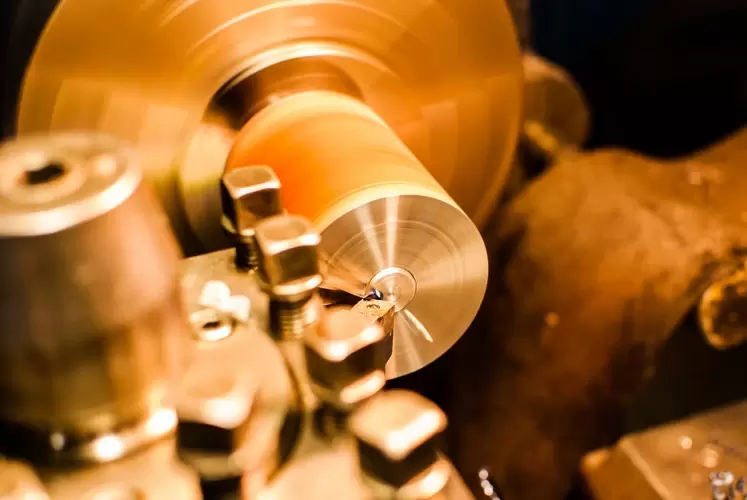
While forging delivers strength, CNC machining provides accuracy. Tight tolerances, complex geometries, and functional surfaces are achieved through advanced machining processes such as:
-
CNC turning for concentricity and roundness
-
CNC milling for grooves, flanges, and mounting features
-
Multi-axis machining for complex profiles
This combination transforms forged blanks into ready-to-install precision components.
Advantages of CNC Machining in China
China has become a global hub for precision machining due to:
-
Mature industrial supply chains
-
Skilled engineering and programming expertise
-
Advanced CNC equipment with scalable capacity
Jiangxi Hongdu Preciosion Machinery integrates in-house CNC machining with forging operations, reducing lead time, improving quality consistency, and maintaining full process traceability.
Precision Control and Quality Assurance
Dimensional Accuracy and Surface Integrity
High-quality stainless steel ring components require strict control over:
-
Flatness and parallelism
-
Radial and axial runout
-
Surface roughness and contact geometry
Advanced inspection tools, including CMMs and ultrasonic testing, are applied to ensure compliance with engineering drawings and industry standards.
Material Certification and Traceability
For export-oriented projects, material traceability is essential. This includes:
-
Heat number tracking
-
Chemical composition reports
-
Mechanical property validation
Jiangxi Hongdu Preciosion Machinery maintains full documentation to support international quality and compliance requirements.
Application-Specific Customization
Heavy Equipment and Power Transmission
Forged and machined stainless steel rings are widely used in:
-
Gear housings
-
Bearing races
-
Couplings and flanges
Precision machining ensures optimal load distribution and operational reliability.
Energy, Chemical, and Marine Industries
In corrosive or high-pressure environments, stainless steel ring forgings provide long service life and reduced maintenance. CNC machining enables customization for sealing surfaces, bolt patterns, and integration with complex systems.
Why Combine Forging and CNC Machining with One Supplier
Working with a single supplier that controls both stainless steel ring forging and CNC machining in China offers clear advantages:
-
Reduced coordination risk
-
Shorter production cycles
-
Consistent quality standards
-
Optimized cost-performance balance
Jiangxi Hongdu Preciosion Machinery follows an integrated manufacturing model, ensuring each stage—from raw material to finished component—is engineered for performance and reliability.
Conclusion: Engineering Strength Meets Precision Manufacturing
The combination of stainless steel ring forging and CNC machining in China represents a mature, efficient, and globally competitive manufacturing solution. Forging delivers structural integrity, while CNC machining ensures dimensional precision and functional performance.
By partnering with experienced manufacturers like Jiangxi Hongdu Preciosion Machinery, global customers can secure high-quality stainless steel ring components tailored to demanding industrial applications.

 hebrew
 French
 Russian
 Arabic