


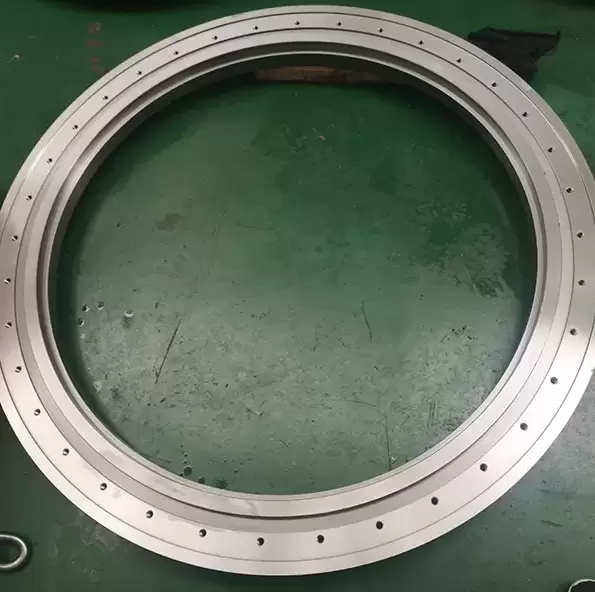
In high-demand industries such as aerospace, automotive, energy, and heavy machinery, stainless steel ring forging parts play a critical role due to their exceptional mechanical properties, corrosion resistance, and reliability under extreme conditions. Unlike casting or machining, forging aligns the metal grain structure, significantly improving strength, toughness, and fatigue resistance. Jiangxi Hongdu Precision Machinery has emerged as a leading provider of high-quality stainless steel ring forging solutions, offering cutting-edge processing techniques, precision control, and customized manufacturing services.

1. Understanding Stainless Steel Ring Forging Parts
Ring forgings are circular components created from stainless steel billets through controlled deformation processes. They are widely used in bearings, flanges, gears, valves, and turbine components. Key advantages of stainless steel ring forgings include:
-
High mechanical strength due to grain flow alignment
-
Excellent corrosion resistance, suitable for marine, chemical, and high-temperature environments
-
Fatigue and impact resistance, critical in rotating and high-stress applications
-
Dimensional precision, ensuring tight tolerances for assembly
Jiangxi Hongdu Precision Machinery combines advanced machinery and technical expertise to produce ring forgings with consistent quality and performance, meeting the stringent requirements of industrial clients.
2. Material Selection and Specifications
2.1 Stainless Steel Grades
The performance of ring forgings depends heavily on material selection:
304 & 316 Stainless Steel: Commonly used for corrosion resistance in chemical and food industries
17-4 PH & 15-5 PH: Precipitation-hardening stainless steels for high strength and wear resistance
Duplex Stainless Steel: Combines high corrosion resistance with excellent mechanical strength
Material selection is guided by operational requirements, environmental exposure, and load-bearing demands.
2.2 Dimensional and Tolerance Requirements
Stainless steel ring forgings are manufactured to precise dimensional specifications, often requiring tight tolerances (<0.5 mm) and controlled surface finish, which is essential for bearing races, valve rings, and turbine components.
3. Forging Process Overview
3.1 Heating and Billet Preparation
Stainless steel billets are preheated to high temperatures (1000–1250°C) to ensure uniform plasticity, minimizing cracks and defects during deformation.
3.2 Ring Forging Techniques
-
Rotary Forging: Billet is pressed between dies to form the ring shape with excellent grain alignment
-
Mandrel Forging: A mandrel or internal tool shapes the inner diameter, ensuring concentricity and uniform wall thickness
-
Open-Die Forging: Offers flexibility for large-diameter or custom-shaped rings
-
Closed-Die Forging: Used for precision, repeatable production of standard ring geometries
Jiangxi Hongdu Precision Machinery employs advanced hydraulic and mechanical presses to achieve uniform deformation, minimizing residual stress and material defects.
4. Heat Treatment and Surface Processing
After forging, heat treatment optimizes mechanical properties:
Solution Annealing: Dissolves precipitates and improves corrosion resistance
Quenching and Tempering: Enhances hardness, toughness, and fatigue strength
Aging (for PH stainless steels): Increases yield and tensile strength
Surface treatments such as shot blasting, polishing, and precision machining improve finish quality, reduce roughness, and ensure optimal dimensional accuracy.
5. Quality Control and Testing
High-quality stainless steel ring forgings require rigorous inspection and testing:
-
Ultrasonic Testing (UT): Detects internal defects or inclusions
-
Magnetic Particle Testing (MPT): Identifies surface and near-surface flaws
-
Dimensional Inspection: Verifies tolerances, concentricity, and wall thickness
-
Mechanical Testing: Confirms tensile strength, yield, hardness, and fatigue properties
Jiangxi Hongdu Precision Machinery implements ISO 9001 and ASTM standard protocols, ensuring consistent quality for critical applications.
6. Industrial Applications
6.1 Aerospace and Aviation
Ring forgings are used in turbine components, engine parts, and landing gear, requiring extreme fatigue resistance and dimensional precision.
6.2 Automotive Industry
Stainless steel ring forgings are critical in gear rings, drive shafts, and high-performance suspension components, providing durability under cyclic loads.
6.3 Energy Sector
Rings are used in steam turbines, hydroelectric generators, and offshore platforms, where corrosion resistance and mechanical reliability are essential.
6.4 Heavy Machinery and Marine
Applications include bearing races, flanges, and hydraulic components, ensuring long service life in harsh environments.
7. Advantages of Partnering with Jiangxi Hongdu Precision Machinery
Jiangxi Hongdu Precision Machinery stands out for:
-
Advanced forging equipment and precision tooling
-
Customized ring designs and material expertise
-
Strict quality assurance with comprehensive testing
-
Technical support and process optimization for industrial clients
Partnering with experienced manufacturers ensures consistent high performance, reduced waste, and cost efficiency across production cycles.
Conclusion
Stainless steel ring forging parts processing combines advanced metallurgy, precision engineering, and rigorous quality control to deliver components capable of withstanding high stress, corrosion, and fatigue. With leading-edge technology and expertise, Jiangxi Hongdu Precision Machinery provides high-quality solutions for aerospace, automotive, energy, and heavy machinery applications, ensuring durability, performance, and reliability in critical industrial environments.

 hebrew
 French
 Russian
 Arabic