


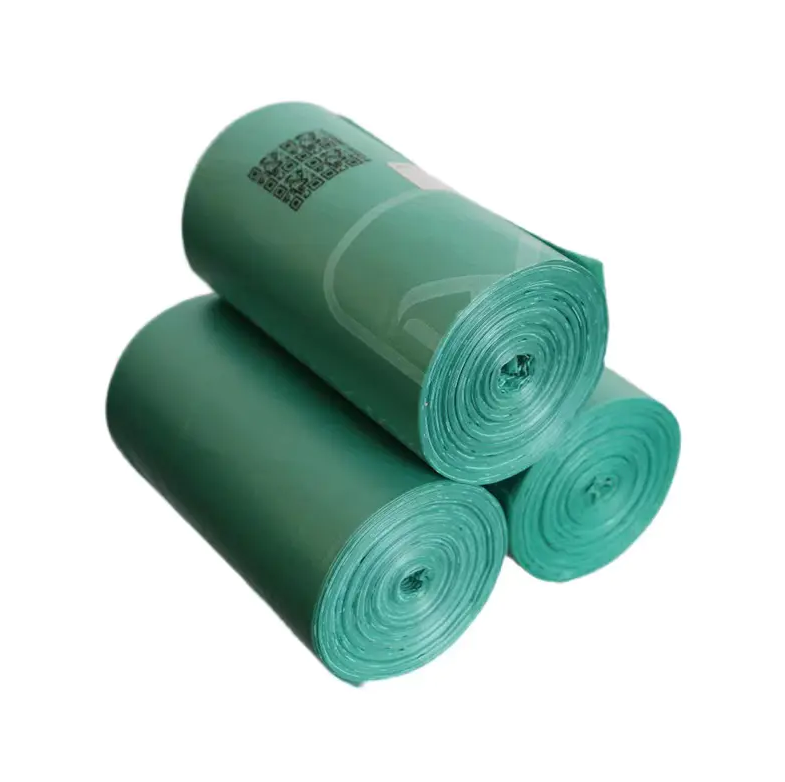
Understanding PE Garbage Bags
PE Garbage Bags are essential for households, businesses, and industrial use, providing a convenient and hygienic way to manage waste. While these bags may seem similar at first glance, they differ significantly in material composition and performance. High-density (HDPE) and low-density (LDPE) PE garbage bags have distinct characteristics that affect their strength, flexibility, environmental impact, and suitability for different tasks. Understanding these differences helps consumers select the most appropriate type for their specific needs.
Material Composition and Structure
High-density PE garbage bags are made from linear polyethylene chains that are tightly packed together. This structure results in a stronger, more rigid material with a higher tensile strength, making HDPE bags resistant to punctures and capable of holding heavier waste loads. Low-density PE bags, on the other hand, are produced from branched polymer chains. This branching makes the material softer and more flexible but slightly weaker in terms of puncture resistance. The differences in molecular structure directly influence how each type of bag performs under stress.
Strength and Durability
HDPE bags are known for their excellent resistance to tearing and puncturing, making them ideal for sharp or heavy waste. They are less likely to stretch or deform under load, which ensures reliability in demanding environments such as industrial settings or outdoor trash collection. LDPE bags, while less rigid, offer better flexibility and can stretch without breaking, making them suitable for lighter household waste or situations where the bag needs to conform to the shape of irregularly sized contents. The choice between HDPE and LDPE ultimately depends on the balance of strength versus flexibility required.
Environmental Considerations
Both HDPE and LDPE garbage bags are made from polyethylene, which is recyclable, but they present different challenges for disposal and degradation. HDPE bags, due to their density, can be more difficult to break down in landfills, whereas LDPE bags, being softer and more pliable, may be easier to compact and transport for recycling. Some manufacturers are now producing biodegradable or compostable versions of both types to reduce environmental impact, but these options are generally more expensive.
Cost and Practical Applications
HDPE bags are usually less expensive to manufacture due to their simpler extrusion process and thinner material requirements for similar strength. LDPE bags are often thicker to achieve the necessary durability, which can increase production costs. In practical use, HDPE bags are preferred for commercial, industrial, and outdoor trash management where puncture resistance is critical, while LDPE bags are commonly used in households and offices where flexibility, odor containment, and bag stretchability are more important.
Choosing the Right Bag
Choosing between high-density and low-density PE garbage bags depends on the intended use. HDPE bags provide strength, puncture resistance, and cost-effectiveness for heavy-duty waste, while LDPE bags offer flexibility and adaptability for lighter loads. By understanding the differences in material composition, durability, environmental impact, and cost, users can select PE garbage bags that meet their specific waste management needs efficiently and sustainably.
Colour: Various colors and transparent colors
Pattern: Customizable
Width: 10cm-60cm (customisable)
Height: 10cm-60cm (customisable)
Thickness decimillimetre-8 decimillimetre (can be customized)
Material:PE
Process: Die-cutting
Product features: Waterproof and anti-corrosion, lightweight and easy to carry, low price, etc.
Application: Loading all kinds of domestic rubbish

 English
 French
 Russian
 Arabic